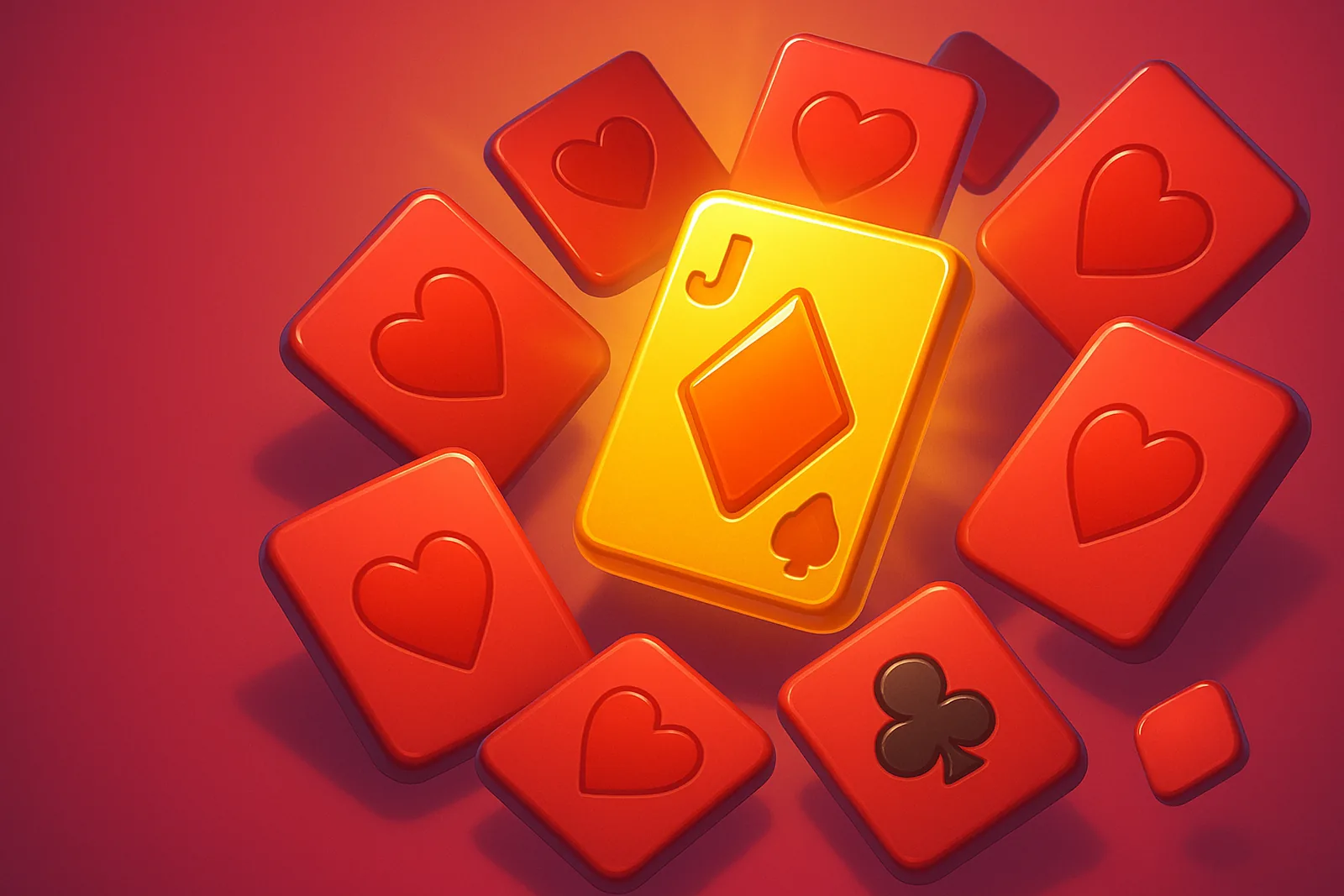
Play Omnibus Hearts if you want a clear target. Play standard Hearts if you want the cleaner, harsher avoidance game. The jack of diamonds, worth minus 10 in Omnibus Hearts, gives you a reason to take risk instead of only ducking pain.
The question often turns up as the ten of diamonds hearts problem, because different groups use diamond bonuses differently. In the Omnibus Hearts dealt here, the bonus card is the jack of diamonds. The exact rank matters less than the effect: one diamond card becomes good enough to fight for, which changes passing, leading, covering, and the last few tricks.
Standard Hearts is elegant because every positive point is bad and every trick might become a trap. Omnibus Hearts is busier. It keeps the fear of hearts and the queen of spades, but adds a prize that can cancel damage or turn a grim hand into a playable one. That single reward makes the variant more forgiving, more tactical, and more openly competitive.
Which should you play if you want a clear target, standard Hearts or Omnibus Hearts?
Choose Omnibus Hearts. Standard Hearts asks you to avoid damage; Omnibus Hearts asks you to avoid damage while also judging when the jack of diamonds is worth chasing. That gives the hand a visible object, especially for players who dislike spending every deal in retreat.
A clear target changes the mood at once. In standard Hearts, winning a trick is usually a compromise: you might be getting rid of a dangerous high card, stopping another player, or being forced in by the suit led. In Omnibus Hearts, a trick can be wanted for its own sake if it may contain the jack of diamonds. The hand has a positive card, not only penalties.
That makes Omnibus Hearts the better first choice for players who enjoy active decisions. Passing is sharper because diamond shape matters. A hand with the ace and king of diamonds feels different from the same high cards in clubs. You are not merely asking, Can this card hurt me? You are also asking, Can this card win the bonus safely?
Standard Hearts is still the better choice if the appeal is purity. It has fewer moving parts, and its punishments are easier to read. Bad choices stay bad. In Omnibus Hearts, a player can take several hearts and still recover if the jack of diamonds lands with them. That is not a flaw. It is the whole point of the variant.
The irritation changes too. Standard Hearts makes you wait for danger; Omnibus Hearts tempts you to walk towards it with your eyes open.
Why does the jack of diamonds change the whole shape of the hand?
The jack of diamonds changes the value of taking control. Standard Hearts rewards restraint almost all the time. Omnibus Hearts makes restraint compete with ambition, because one trick can reduce your score instead of raising it.
| Decision point | Standard Hearts | Omnibus Hearts |
|---|---|---|
| Diamond card | No diamond has a special score. Diamonds are mainly exits, entries, or suit-control tools. | The jack of diamonds is worth minus 10, so diamonds can become a scoring suit. |
| Reason to win a trick | You usually win because you must, or because you are managing dangerous cards. | You may win deliberately to capture the bonus, even if the trick carries some risk. |
| Passing pressure | Passing focuses on high spades, unwanted hearts, and suit shortage. | Passing also asks whether you can protect, chase, or discard around the jack of diamonds. |
| Mid-hand tension | Control often feels like a liability once hearts may be dumped on you. | Control can be valuable if it lets you time a diamond lead or trap the bonus. |
| Endgame | The last tricks are mostly about avoiding remaining hearts and the queen of spades. | The last tricks can split attention between avoiding damage and forcing the diamond bonus. |
This is why the ten of diamonds hearts search phrase is useful even when the actual Omnibus card is the jack. The rank is local custom; the design problem is stable. A single negative-point diamond gives players permission to be bold. It also punishes lazy boldness, because chasing the bonus with no exit cards can hand the table your score.
When is standard Hearts still the better choice?
- Play standard Hearts when you want the pure avoidance puzzle. Every heart is bad, the queen of spades is worse, and there is no diamond prize to soften a mistake. That clarity gives the game its bite.
- Pick it when you are teaching the base rules. New players already have to learn passing direction, broken hearts, following suit, point counting, and the queen. Adding the Omnibus bonus too early can blur the lesson.
- Choose it when you want punishment to stay simple. If a player takes points, their score rises. In Omnibus Hearts, the jack of diamonds can partly cancel damage, which is satisfying for the chaser but less severe for the table.
- Use it when you prefer quiet pressure over visible targets. Standard Hearts is often about what has not happened yet: who still holds spades, who is void in hearts, who is waiting to dump the queen.
- Play it when table memory matters more than opportunism. Omnibus Hearts still rewards counting cards, but the bonus card pulls attention. Standard Hearts keeps the focus on exits, suits, and the danger hidden in ordinary tricks.
What should you expect from Omnibus Hearts against three bots?
Expect a faster, less social version of the same argument. Bots do not sigh when you pass them the queen of spades, and they do not take revenge because of the previous hand. They play the cards in front of them, which makes the Omnibus bonus easier to study.
Watch how often the jack of diamonds changes your willingness to take a trick. Against people, there is table talk, bluffing, memory, irritation, and habit. Against bots, the pattern is cleaner. You can ask whether a diamond lead is actually strong or merely tempting.
- Passing becomes visible practice. You can compare hands where you kept diamond strength with hands where you threw it away.
- Risk feels immediate. Chasing the jack while the queen of spades is loose is a common way to turn a plan into damage.
- Endgames are useful. With fewer distractions, it is easier to count remaining hearts and decide whether the bonus is still reachable.
Do not expect the bots to recreate a sharp regular table with grudges and long memory. That is not the point. The value is repetition. Omnibus Hearts is one of the hearts variants where repeated deals teach quickly, because the same question returns in different forms: is this the moment to take control, or the moment to disappear?
How do the two variants change your early and late decisions?
- Early passing in standard Hearts is about removing future pain. High spades are dangerous because of the queen. High hearts are awkward because they may win point tricks after hearts break. Short suits matter because voids let you dump. The pass is defensive before it is clever.
- Early passing in Omnibus Hearts has a second question. Can your diamonds win the jack, or are they just bait? Ace, king, and queen of diamonds can be useful if they give you timing. Stray middle diamonds may only trap you in tricks you do not want.
- Early leads in standard Hearts favour safety and information. You are testing suits, clearing exits, and avoiding needless control. A low card in a long suit can be worth more than a high winner, because it keeps you out of the firing line.
- Early leads in Omnibus Hearts can create a race. If the jack of diamonds has not appeared, diamond leads may force it out or reveal who can protect it. The danger is obvious: a trick aimed at the bonus can collect hearts later if you run out of safe cards.
- Late standard Hearts is about containment. Count hearts, track the queen of spades, and avoid being the player left with the last high cards. If someone else is void, your neat exit may no longer be safe.
- Late Omnibus Hearts asks whether the bonus still matters. If the jack of diamonds is gone, the hand starts to resemble standard Hearts again. If it remains, the final tricks may reward the player with enough control to take exactly one wanted trick and dodge the rest.
Frequently asked questions
Yes. The point deck is still built around avoiding hearts and the queen of spades. The jack of diamonds adds one reward card, so the hand has a positive target as well as dangers. You still need suit control, counting, and timing; you just get more interesting reasons to take a trick.
10 is the score swing, not the card rank. In Omnibus Hearts, the jack of diamonds is worth minus ten points. That means it reduces your score by ten if you take it in a trick. The ten of diamonds is just an ordinary diamond unless a local house rule says otherwise.
People often think the bonus card cancels the queen, but the correction is brutal: the queen of spades is still worth thirteen points against you. Taking the jack of diamonds and the queen in the same hand leaves you worse off. The bonus is a prize, not a licence to be careless.
You hold ace, king, nine, and three of diamonds, with only two spades and several low hearts. That is a hand with a real plan: you can try to draw diamonds, win the trick containing the jack, and still dodge the queen. A pile of high spades would make the same diamond strength much less attractive.
It depends on the rest of your diamond holding: pass isolated high diamonds when they are likely to win awkward tricks, but keep them when they help you control the suit and catch the jack. Ace-king-small is different from ace alone. The first can be a trap; the second is often just a liability.
Compared with Hearts (No Passing), Omnibus Hearts gives you more influence before the first trick when passing is used, because you can shape a hand around the jack of diamonds. Hearts (No Passing) is more about living with the mess you are dealt. Omnibus Hearts makes the reward card part of your pass, your count, and your timing.
Take the jack when you can do it without taking the queen of spades or a fistful of hearts. The exception is the messy trick where the jack is bait. If winning it opens you to a later queen, or leaves you leading from a dangerous suit, let someone else have the ten-point discount.
Most people chase the jack before they have counted exits. They see minus ten and forget the next lead. If you win a diamond trick and must then lead spades into the queen or hearts into a bad split, the bonus has dragged you into trouble. The card is worth planning for, not lunging at.
Omnibus Hearts is the Hearts variant where the jack of diamonds counts as minus ten points for the player who captures it. The name refers to the extra scoring rule, not to a different deck or a different number of players. On Veena Games, you play it free in the browser against three bots.
Count your diamonds before you worry about cleverness. If you have the cards to control diamonds later, protect that plan and avoid giving away the suit cheaply. If your diamonds are weak, play normally and focus on staying safe. The jack of diamonds matters, but the first trick rarely decides it by itself.
Final thoughts
If a friend asked which table to sit at, I would ask what sort of irritation they enjoy. Standard Hearts irritates you with helplessness. You can see the bad trick coming, count the suits, know exactly why it is coming, and still have no clean escape. That is a fine kind of card-game misery.
Omnibus Hearts irritates you with temptation. The jack of diamonds sits in the hand like a dare. You know a safe discard would be sensible, but you also know that minus 10 can repair a messy deal. So you reach. Sometimes you look brilliant. Sometimes you collect hearts and deserve every point.
The better everyday choice is Omnibus Hearts if you are playing short sessions or learning through repetition, because the target gives each hand a stronger centre. Standard Hearts is better when you want the stricter old lesson: do not take what you cannot carry.
The habit that travels worst is automatic control. In standard Hearts it can be poison. In Omnibus Hearts it can win the jack of diamonds, then leave you holding the trick nobody else wanted.
-
 Hearts
: From Reversis to the Windows Install Disc
A clear account of Hearts history, separating the Reversis origin story from better-attested changes such as Black Lady and Microsoft Hearts.
18 August 2026
Hearts
Hearts: From Reversis to the Windows Install Disc
A clear account of Hearts history, separating the Reversis origin story from better-attested changes such as Black Lady and Microsoft Hearts.
18 August 2026
-
 Hearts
 Without Passing: Rules, and Why It Is Harder
Hearts without passing removes the pass, so 4 players keep their dealt hands and score the usual hearts and queen of spades points.
18 August 2026
Hearts
Hearts Without Passing: Rules, and Why It Is Harder
Hearts without passing removes the pass, so 4 players keep their dealt hands and score the usual hearts and queen of spades points.
18 August 2026
-
Hearts
Can You Cheat at Hearts?
Hearts cheating exists at human tables, mostly through collusion or signalling, but famous casino tricks rarely translate to free browser play.
16 August 2026