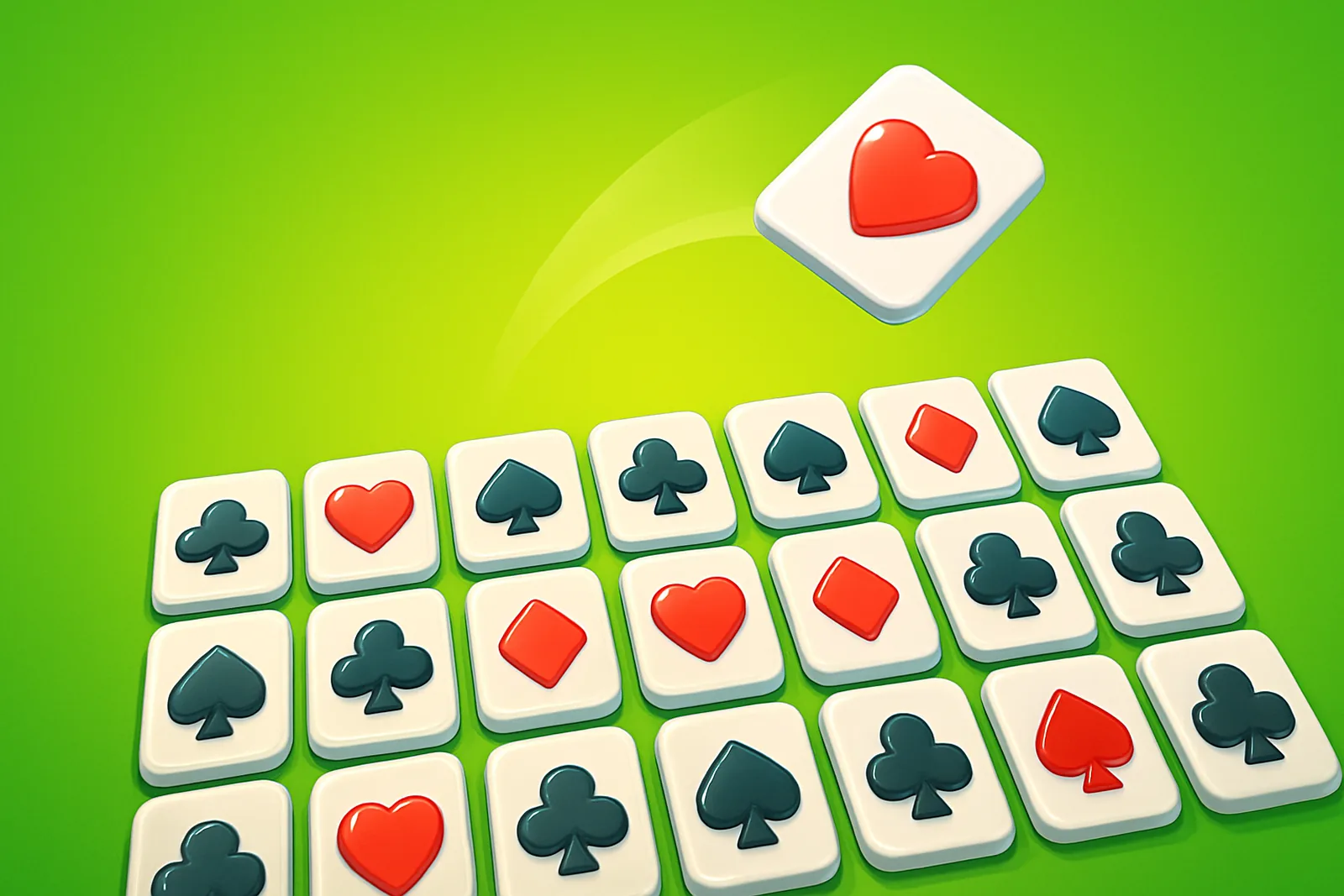
The last card decides Golf Solitaire because every earlier clearance either preserves or destroys a final bridge to the waste. Good golf solitaire strategy is less about grabbing exposed cards and more about leaving yourself one playable rank when the stock runs thin.
You already know the golf solitaire rules: suit does not matter, and a card plays if it is one rank above or below the waste. That small rule set makes the game feel loose. It is not. Each rank you remove changes the next few turns, and the final turn exposes whether your earlier choices were connected or merely busy.
Use a practical rule set, not a promised win rate. The evidence for exact Golf Solitaire odds is thin, and different versions handle scoring and wrapping differently. These golf solitaire tips are ordered and decidable on the next deal. Pick between two legal cards. Decide whether to clear or hold. Notice when the waste pile is becoming a trap. The aim is not brilliance. It is to reach the last handful of cards with more than one live route.
Why does the last card decide the whole deal?
The final card is where hidden cost becomes visible. A move that looked harmless on the fourth waste card can strand the last tableau card twenty turns later, because Golf Solitaire has no reserve, no tableau building, and no way to undo a rank you spent too early.
The useful mental model is a bridge. A 7 can lead to 6 or 8. If you clear every visible 6 because it is available, you may remove the only bridge back from a later 7. The reason to preserve a bridge is direct: the waste pile must keep touching the tableau by rank. The wrong time to preserve it is when the held card blocks two or more face-down cards in the same column. Hidden cards are worth more than a tidy future idea.
Middle ranks usually matter more than edge ranks. A 7 has two natural neighbours. An Ace usually has fewer useful exits, depending on the version's rank wrapping. So a fair golf solitaire strategy is to spend edge cards when they help and protect central ranks when they connect several columns. This is wrong when the central card sits alone and the edge card opens a column. Exposure beats theory.
Duplicate ranks are the quiet danger. Clearing three 9s in a row feels efficient, but it can starve later 8s and 10s. Keep at least one duplicate if it does not cover anything important. Break that habit when the duplicate is on top of a long column, because the card underneath may be the real route out.
Before you take an easy card, ask what rank it leaves on the waste and what rank it removes from the layout. If the answer kills the only bridge to a covered column, wait. If the card opens hidden information or completes a real chain, spend it. The last card will remember the difference.
Which move should you make first on a fresh layout?
- Clear the legal card that uncovers the deepest column. The reason is simple: information has value, and a newly exposed card may extend the same run. This is wrong when the deeper column reveals into a rank you have already exhausted, while a shallower move opens an immediate two-card chain.
- If two moves uncover equal depth, choose the move that leaves the waste on a middle rank. A 6, 7, 8, or 9 usually has more practical exits than an Ace or King. This is wrong when the layout shows several exposed edge cards ready to play next.
- Prefer a move that creates a visible chain over one that merely removes a card. If playing a 5 lets you see 4, 6, or another connected step, you have momentum. This is wrong when the chain burns through the only connector needed to reach a buried card later.
- Do not start by clearing a harmless duplicate from a flat row. A duplicate is often a spare bridge. The reason to wait is that it may rescue a later waste card. This is wrong when that duplicate covers a face-down card or completes a long run now.
- When none of the above separates the choices, play the card that reduces rank clutter. If four visible cards sit around the same rank, remove one to loosen the layout. This is wrong when the cluttered rank is your only path to two different columns.
When should you hold a card instead of clearing it?
- Hold a connector that links two visible clusters. If the waste is on 8 and you can play a 7, but you also see several 6s and 8s waiting, that 7 may be the hinge for a longer run. The reason is continuity. The wrong move is holding it when it covers a face-down card; seeing unknown cards normally beats saving a known one.
- Hold the last visible card of a rank when both neighbouring ranks remain exposed. A single 10 beside visible 9s and Jacks gives you future choice. Clear it too early and those neighbours may become decorative. This is wrong when the stock is almost gone and the 10 is playable now; future choice has no value if there is no future turn to use it.
- Hold a card that would push the waste to an edge rank with no visible exit. Playing Queen to King can be a dead end if no Queen or Ace-style return is available under your local rules. The reason is to avoid a forced stock flip. This is wrong when the edge play uncovers a card immediately beneath it.
- Hold a top card in a short column if a long column has a comparable legal play. The long column probably hides more decisions. The short column can wait. This is wrong when the short-column card is the only remaining card of its rank and you need it as a bridge.
How do you stop building a dead pile?
A dead pile forms when the waste keeps landing on ranks the tableau cannot answer. It often starts with a perfectly legal clearance: you play the visible card, then another, then notice the next waste card touches nothing useful. The cure is to judge the waste before you admire the clearance.
- Count exits, not cards cleared. Before playing, look for the ranks one above and one below the card you will leave on the waste. More exits mean a safer pile. This is wrong when a low-exit move uncovers several hidden cards; new information can outweigh current exits.
- Stop long runs that consume both sides of the same rank. A run like 8, 7, 6, 7, 8 may remove cards quickly while emptying all nearby bridges. The reason to stop is rank starvation. This is wrong when the run clears a column or leaves the waste beside many exposed neighbours.
- Use the stock as a reset, not a rescue plan. Flipping stock after every weak move leaves the endgame dependent on luck. The reason is that stock cards are limited, while bad waste positions repeat. This is wrong when no tableau play has an exit and delaying only clears a valuable connector.
One practical check helps before a stock flip: name the ranks that would help you. If only one rank improves the position, you have probably built a dead pile already. If several ranks help, the pile is still alive. That test is not clever. It is fast, and fast is what you need while playing Golf Solitaire at normal pace.
Which habits win more often than clever moves?
| Habit | Why it works | Wrong when | Next-deal test |
|---|---|---|---|
| Check covered cards first | Hidden cards create new routes; exposed singletons do not. | The exposed card starts a clear visible chain. | Ask which legal move uncovers the most unknowns. |
| Keep one spare connector | A saved rank can link two later waste positions. | It blocks a long column or the stock is nearly spent. | Look for the last visible card of a rank before clearing it. |
| Avoid edge-rank traps | Edge ranks often have fewer exits, so they force stock flips. | The edge play exposes a card or completes a column. | After the move, name the visible replies. |
| Break duplicate runs early | Clearing every copy of a rank removes future bridges. | The duplicates are covering unknown cards. | Leave one copy if it costs no exposure. |
| Pause before stock flips | A tableau move may still repair the waste without spending stock. | Every legal tableau move leaves no visible exit. | Count the exits from the proposed waste card. |
Frequently asked questions
Yes. Golf Solitaire often gives you one narrow route through a blocked rank. If you spend the card that connects that route, the remaining tableau can still look busy, but it has no bridge back to the waste pile. The mistake may happen early; you usually feel it only when the final cards refuse to connect.
Two ranks ahead is the minimum useful habit: the card you play now, the card it allows, and the rank you will need after that. Looking further can help, but only if the visible layout gives you real information. Do not invent a perfect stock card in your head. Count the exposed ranks you can actually reach.
The common misconception is that the longest visible run is automatically best. The correction is to ask what the run leaves behind. A five-card sweep that ends on a rank with no follow-up may be worse than a two-card move that exposes both neighbours of the waste card. Length is useful only when it preserves exits.
You have a 7 on the waste pile and can play either a 6 from the bottom of one column or an 8 that uncovers a 9. The 8 is usually the cleaner move, because it creates the next step before you need it. The 6 may score now and strand you on a rank the layout cannot answer.
It depends on the exposed ranks: if one column is hiding several useful neighbours, emptying it can open the deal; if the columns are already thin, spreading your clears may keep more ranks alive. Golf Solitaire is not a tidying exercise. A neat table means little if every remaining card points to the same dead end.
Compared with Pyramid Solitaire, Golf Solitaire is less about making a fixed total and more about keeping a chain alive. Pyramid Solitaire rewards spotting pairs; Golf Solitaire rewards sequencing and restraint. If you like quick decisions with visible consequences, Golf Solitaire feels sharper. If you prefer arithmetic checks, Pyramid Solitaire may feel more orderly.
Take the move that opens a new rank; break that rule when the open card would kill your only bridge. A playable card is not always urgent. If leaving it in place gives you a later step back into the chain, hold it. The exception is when the stock is running low and waiting no longer buys information.
Most people treat the stock as a rescue pile instead of a clock. They clear easy cards, stall, then expect the next stock card to fix the shape they created. The stock gives chances, not promises. If your tableau has no flexible ranks left, drawing faster only proves the damage sooner.
The waste pile is the face-up card you are building from. In Golf Solitaire, a tableau card can be played onto it when its rank is one higher or one lower, subject to the version’s rules. Every move changes the waste card, so the pile is both your scoring path and your main constraint.
Use the stock when the tableau has no move that improves the next position. Before you draw, check whether a playable card opens a neighbour, frees a blocked column, or preserves a useful rank for later. If it does none of those things, drawing is better than spending a card that only makes the layout smaller.
Nobody knows precisely what a good win rate is for every Golf Solitaire player, because rule details and deal selection change the answer. The best available figure is your own recorded win percentage on the same game, played the same way. Track enough rounds for lucky streaks to fade, then judge progress against that baseline.
Golf Solitaire is named after golf scoring: low totals are better than high totals. The card game keeps that idea by treating unplayed tableau cards as the damage left on the course. Browser versions make the scoring instant, but the joke in the name is older than online play: finish with as little left as possible.
The cost is control. Chasing every legal card can leave you with a tidy-looking tableau and no rank that connects to the waste pile. You lose the ability to choose. In a good round, some cards are taken late not because they were hidden, but because taking them early would have spent your last useful ladder.
Final thoughts
If you have played a few dozen hands, you already know the feeling: a deal seems open, then suddenly every stock card lands one rank away from being useful. That is the point where most players blame the shuffle. Sometimes they are right. Many Golf Solitaire deals give you little room.
Still, the hands worth studying are the awkward ones where you had two legal choices and picked the prettier clearance. Next time, slow down for that one choice only. Do not turn the whole game into accountancy. Just ask what the waste will need after your move, and whether the card you are about to remove is the last bridge of its kind.
A friendlier rule of thumb is this: if a move opens a card, it gets respect; if it only makes the row look neater, it must prove itself. Golf Solitaire rewards neatness less than patience. It also punishes patience when it becomes hoarding, so be prepared to spend a saved connector the moment it opens a column or prevents a dead stock flip.
The best sign is not a spectacular chain. It is reaching the last few cards and still having a choice. That means the deal has not been playing you. Good. Take the small win, then make the next card earn its place.
-
 Pyramid
TriPeaks Strategy: Reading the Board Before You Tap
A practical TriPeaks guide for repeat players who want ordered choices, clearer board reading, and fewer wasted winning chances.
12 August 2026
Pyramid
TriPeaks Strategy: Reading the Board Before You Tap
A practical TriPeaks guide for repeat players who want ordered choices, clearer board reading, and fewer wasted winning chances.
12 August 2026
-
 Pyramid
Why Do So Few Pyramid Solitaire Games Come Out?
Classic Pyramid Solitaire is winnable only about 2% of the time, mainly because useful pairing cards are often buried under one another.
12 August 2026
Pyramid
Why Do So Few Pyramid Solitaire Games Come Out?
Classic Pyramid Solitaire is winnable only about 2% of the time, mainly because useful pairing cards are often buried under one another.
12 August 2026
-
 FreeCell
Baker's Game vs FreeCell: One Rule, Twice the Difficulty
Baker's Game is the harder FreeCell variant: play FreeCell first for fluency, then Baker's Game when ordinary FreeCell feels too forgiving.
12 August 2026
FreeCell
Baker's Game vs FreeCell: One Rule, Twice the Difficulty
Baker's Game is the harder FreeCell variant: play FreeCell first for fluency, then Baker's Game when ordinary FreeCell feels too forgiving.
12 August 2026