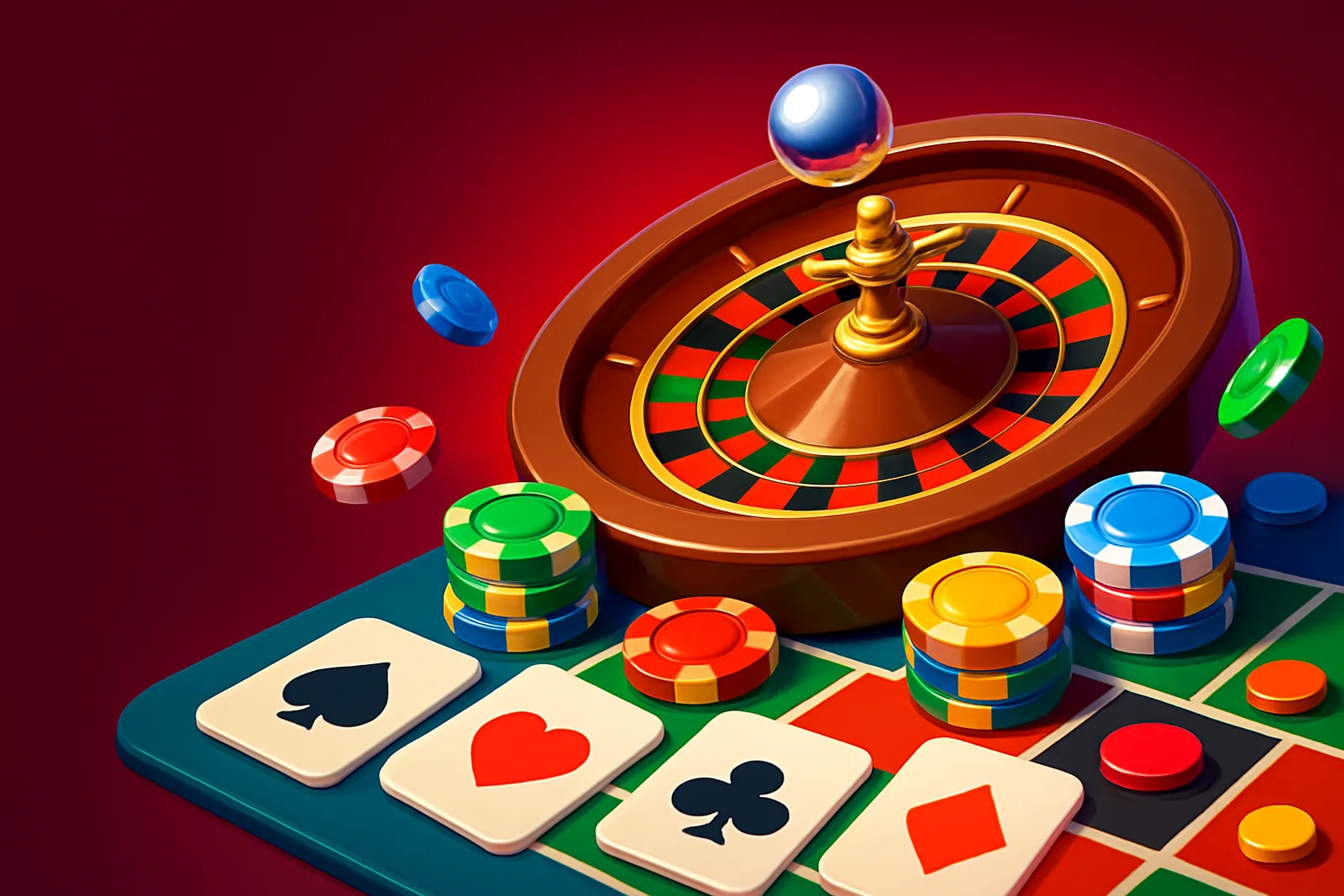
The roulette wheel adds up to 666 because its numbered pockets run from 1 to 36, and 1 plus 2 plus every number through 36 equals 666. The zero is not counted. That arithmetic is real; most of the darker meaning attached to it is later storytelling.
The roulette 666 fact is neat because it feels too exact to be accidental. It probably was not. Casino games are full of number patterns, but there is no solid evidence that the wheel was designed to carry a biblical joke, a curse, or a secret code. The nickname devil’s wheel fits roulette because the game is fast, risky, and visually theatrical. The sum gave the nickname a better hook.
Roulette history is messier than the legend. The name is French, the modern casino game took shape in France, and the single-zero version spread through European casinos in the 19th century. Older forms differed by wheel, layout, and house rules. Some dates are firm. Some famous stories, including the one about Blaise Pascal inventing roulette, are the usual story, unverified.
Why does the roulette wheel add up to 666?
The roulette wheel adds up to 666 for a plain mathematical reason: the non-zero pockets are numbered 1 to 36. Add that sequence and you get 666. The zero pocket is part of the game, but it is not part of the total because its value is zero.
There is no need for a hidden formula. The sum of the first 36 whole numbers is 36 multiplied by 37, then divided by 2. That gives 666. A European wheel has 37 pockets in all: 0 plus 1 to 36. An American wheel has 0 and 00 as well, but the numbered run is still 1 to 36, so the same total is quoted when people talk about roulette 666.
The order of the roulette wheel numbers matters for play, but not for the sum. On a European wheel, neighbouring numbers on the wheel are deliberately spread so that red and black, high and low, odd and even do not fall into a simple rising sequence. The betting layout on the cloth is different again: three columns of 12 numbers, with zero at the top. None of that changes the arithmetic.
People later gave the sum a darker reading. In the Book of Revelation, 666 is associated with the beast, so roulette gained an easy gothic nickname: the devil’s wheel. The evidence that anyone designed the wheel to reach 666 for that reason is thin. The total is fact. The intention is not.
Where did roulette come from, and why is the name French?
Roulette is a French word. It is the diminutive of roue, meaning wheel, so roulette means little wheel. That part is solid. The casino game we recognise also took shape in France, especially in Paris, before spreading through European gambling rooms.
A firm printed marker appears in 1796, when Jacques Lablée published La Roulette, ou le Jour, a novel set around gambling at the Palais-Royal in Paris. By then roulette was recognisable enough for readers to understand the title and setting. That does not mean 1796 was the invention date. It means the game was already present in public gambling culture by the late 18th century.
The older ancestry is harder to pin down. Roulette resembles several wheel and number games from earlier Europe. English E.O., short for Even-Odd, used a wheel and simple parity betting. Italian and French gambling games also mixed numbered layouts, odds, and quick settlement. Roulette did not arrive fully formed in one clean moment. It gathered features.
The famous name attached to its origin is Blaise Pascal, the French mathematician, who worked on probability and experimented with perpetual-motion ideas in the 17th century. The usual story, unverified, says roulette grew from one of those wheel experiments. It is a tempting tale because Pascal really did care about mathematics and chance. The record does not prove he invented the casino game.
What changed between old roulette and the version people play now?
Old roulette was not one fixed rulebook. The modern split is clearer: European and French Roulette use one zero, while American Roulette uses both 0 and 00. That single design choice changes the house edge more than any superstition around the wheel.
| Feature | Older roulette and related games | Modern roulette people play now |
|---|---|---|
| Zero pockets | Early 19th-century wheels often included 0 and 00, though details varied by place and operator. | European Roulette has 1 zero and a 2.70% house edge on standard bets; American Roulette has 0 and 00 and a 5.26% edge. |
| Wheel and cloth | The wheel, table layout, and available bets were less standardised, which made local rules matter. | The number range is fixed at 0 to 36 on European wheels, with a familiar inside and outside betting layout. |
| French influence | Paris gambling rooms helped make the French name and format visible by the late 18th century. | French Roulette keeps French bet names such as voisins du zéro, tiers du cylindre, and orphelins in many casinos. |
| Single-zero spread | The Blanc brothers are associated with promoting single-zero roulette at Bad Homburg in the 1840s. | Single-zero roulette became the main European casino form, later strongly linked with Monte Carlo. |
| Even-money rules | Rescue rules were not universal, so the same-looking bet could have different practical value. | French rules such as la partage or en prison can reduce the effective edge on even-money bets to 1.35%. |
The wheel-and-cloth shape changed less than the price built into the zero. A wheel, a ball, and a grid stayed. The price of the zero changed everything.
Why do some stories call it the devil’s wheel?
People call roulette the devil’s wheel because the roulette wheel numbers total 666, and 666 carries a strong biblical association with evil. The name also suits the mood of the game: a spinning wheel, a small ball, sudden reversals, and money risked on one resting place.
The phrase is memorable, not documentary proof. It tells you how people talked about roulette after the fact, especially in moralising stories about gambling, temptation, and ruin. It does not show that the makers of the wheel intended a Satanic reference.
- The arithmetic is real. The numbers 1 to 36 total 666.
- The biblical association is real. Revelation 13:18 gives 666 as the number of the beast.
- The design claim is weak. No reliable early record shows roulette was built around that reference.
- The nickname travelled well. Devil’s wheel, and the plainer search phrase devils wheel, stick because they turn a table game into a story.
There is another reason the nickname lasted: roulette feels more fateful than many card games. In Klondike Solitaire (Turn 1) or FreeCell, you see a position and work through choices. Roulette strips the moment down. You place chips, the croupier releases the ball, and the result arrives without negotiation.
That feeling can make the wheel look symbolic. The mathematics explains the 666. Human imagination supplies the horns.
Which bits of roulette history are solid, and which are the usual story, unverified?
- Solid: the numbers add to 666. The roulette wheel numbers from 1 through 36 total 666. This is arithmetic, not interpretation.
- Solid: the name is French. Roulette comes from French, from roue, meaning wheel. The word means little wheel.
- Solid: roulette was known in Paris by 1796. Jacques Lablée’s La Roulette, ou le Jour gives a dated printed reference tied to the Palais-Royal gambling scene.
- Solid: modern European Roulette uses a single zero. The standard European wheel has 37 pockets: 0 and 1 to 36. Standard bets carry a 2.70% house edge.
- Solid: American Roulette diverged. American Roulette uses both 0 and 00, raising the standard house edge to 5.26%.
- Mostly solid: the Blanc brothers promoted single-zero roulette. François and Louis Blanc are closely associated with the single-zero game at Bad Homburg in the 1840s, and with the later rise of Monte Carlo gambling.
- The usual story, unverified: Pascal invented roulette. Blaise Pascal worked on mathematics, probability, and wheel problems. The leap from that to the casino game is not proved by the record.
- The usual story, unverified: 666 was the point of the design. The total is exact, and the devil’s wheel nickname is easy to understand. Evidence that the wheel was numbered to create that reference is thin.
- Unclear: one single birthplace. Roulette history looks like development from several European wheel and betting games, rather than one inventor writing one rulebook on one day.
Frequently asked questions
No. The total is arithmetic: add every number from 1 to 36 and you get 666, while the zero adds nothing. There is no solid evidence that the layout was designed to carry a religious message. The nickname came later because the total is memorable, not because the wheel proves a hidden plan.
37 numbers are on a European roulette wheel: 0 plus 1 to 36. The betting layout also shows those same numbers, arranged for placing chips rather than matching the physical order on the wheel. That single zero is the important difference from American Roulette, which adds 00 and changes the odds.
The common misconception is that Blaise Pascal invented casino roulette while trying to build a perpetual-motion machine. The correction is less tidy: Pascal did work on probability and mechanical problems, but the evidence tying him to the gambling wheel is thin. Roulette as a named casino game is much easier to trace in 18th-century France.
Put one chip on red and one chip straight up on 17, then spin 0. The red bet loses because zero is neither red nor black. The 17 bet also loses because only 17 pays it. If the ball had landed on 17, the straight-up bet would pay 35 to 1.
It depends on the thing you are looking at: the table layout is in counting order, but the wheel order is deliberately mixed. European Roulette has a fixed wheel sequence with red and black alternating in a designed pattern around the zero. That order helps spread neighbouring numbers across the wheel rather than grouping 1, 2, 3, and so on.
Compared with American Roulette, European Roulette is the cleaner game for most players because it has one zero instead of two. On a standard European wheel the house edge is 2.70%. On American Roulette, most bets face 5.26%. The rules look almost identical, but the extra 00 changes the price of every miss.
The short rule is: outside bets win more often and pay less; inside bets win less often and pay more. The exception is the zero, which stops even-money bets from being true coin flips. Red, black, odd, even, high, and low all lose when the ball lands on 0.
What most people do wrong is treat the last ten spins as a clue to the next one. Five blacks in a row do not make red due. A fair roulette spin has no memory. You can use past results to audit a wheel or a programme over time, but not to predict the next pocket.
French called bets are named wagers based on sections of the wheel, not on the table grid. Voisins du Zéro covers numbers near zero on the wheel; Tiers du Cylindre covers a different arc; Orphelins covers the numbers left out by those two. They are shortcuts for placing several ordinary chips at once.
Open Roulette, spin a few times, and compare the displayed result with the recorded spin sequence in the game. Do not judge fairness from a short streak; streaks happen. What you can check is that the game is using the visible European wheel, the single zero, and the result history it shows you.
Nobody knows precisely who first used the nickname in public. The best available figure is the arithmetic one: 1 to 36 totals 666, which made the label easy to repeat. Claims about monks, banned tables, or a named inventor usually arrive without primary evidence, so treat them as folklore unless they cite a source.
A historical fact: in the 1840s, François and Louis Blanc promoted single-zero roulette at Bad Homburg, which helped the format become famous. Double-zero wheels existed before and survived elsewhere. That is why modern players still meet two main families of the game: European Roulette and American Roulette.
The cost of getting it wrong is usually paid in extra zeroes and bad expectations. Choosing American Roulette instead of European Roulette nearly doubles the standard house edge, from 2.70% to 5.26% on most bets. Chasing a pattern is the other common leak: it changes your stake size, not the wheel.
Final thoughts
The best roulette stories have a habit of sounding tidier than the past was. A wheel that adds to 666. A French genius in a workshop. A casino town finding the perfect rule. Some of that is true, some is plausible, and some is folklore wearing a dinner jacket.
I would keep the distinction. The 666 total is worth knowing because it is exact and surprising. The French name is worth knowing because it points to where the recognisable game became public. The single zero is worth knowing because it changes the cost of every ordinary bet. Those facts make roulette more interesting, not less.
The devil’s wheel nickname belongs to the way people talk about chance when chance frightens them. A ball lands in a pocket and suddenly the result feels moral, lucky, cursed, deserved, or impossible. The wheel has no view on any of that. It spins through its sequence, and the arithmetic sits there calmly underneath the noise.
If you want one useful habit from roulette history, take this: always separate the mechanism from the story told about it. The mechanism pays the bet. The story is just what people bring to the table.
-
Roulette
The Gambler's Fallacy: Why the Wheel Owes You Nothing
Roulette can test attention in the moment, but the gambler’s fallacy turns streaks into false promises the wheel never made.
19 August 2026
-
 Roulette
American Roulette Rules: The Double-Zero Wheel
American Roulette uses a 38-pocket double-zero wheel, making its rules familiar but its odds sharper than European roulette.
18 August 2026
Roulette
American Roulette Rules: The Double-Zero Wheel
American Roulette uses a 38-pocket double-zero wheel, making its rules familiar but its odds sharper than European roulette.
18 August 2026
-
 Roulette
French Roulette Rules: The Kindest Wheel in the House
French Roulette is single-zero roulette with La Partage on even-money bets, giving clearer rules and gentler zero outcomes than American Roulette.
18 August 2026
Roulette
French Roulette Rules: The Kindest Wheel in the House
French Roulette is single-zero roulette with La Partage on even-money bets, giving clearer rules and gentler zero outcomes than American Roulette.
18 August 2026