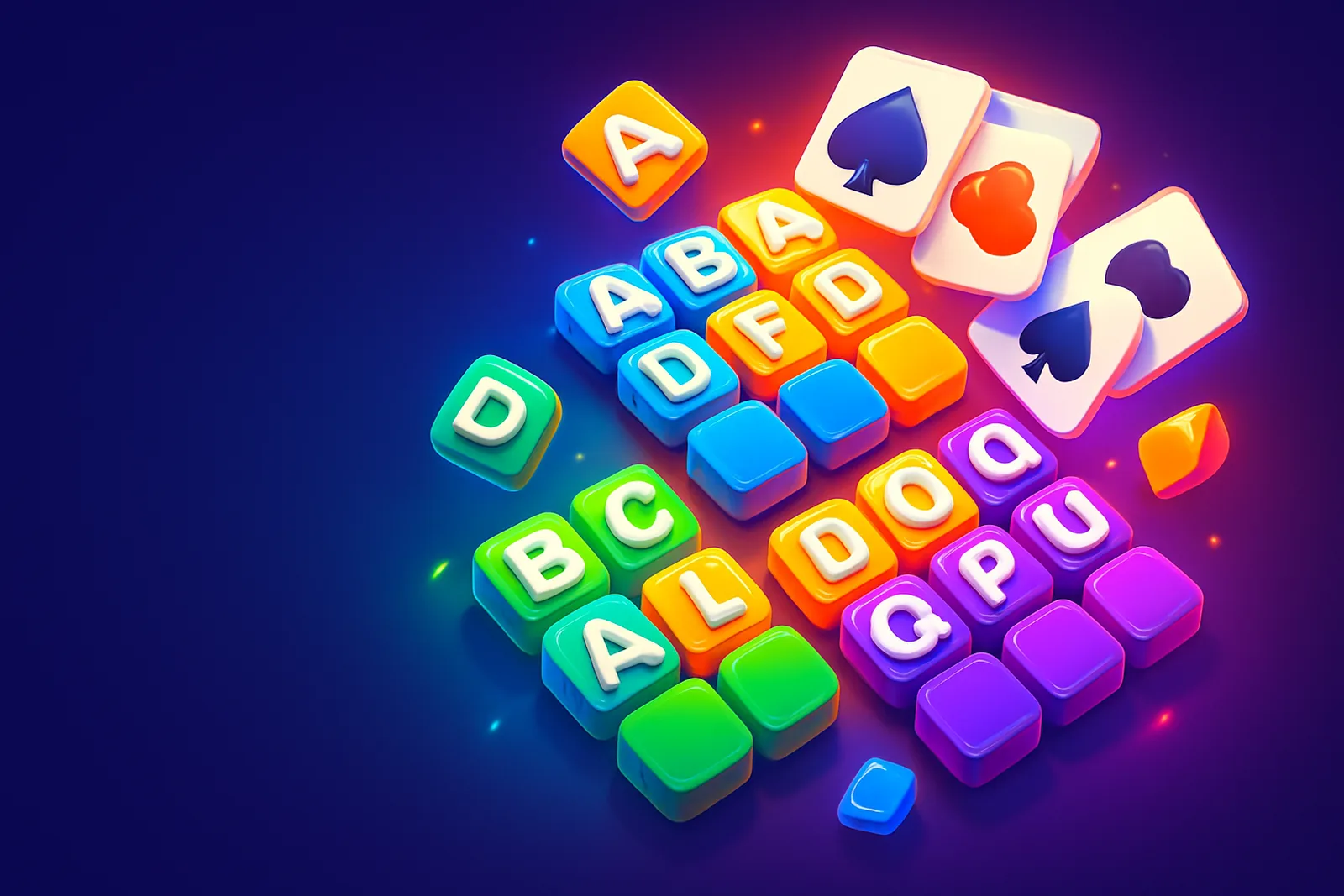
Win more Quordle by spending the first 3 guesses on shared information, then changing pace as soon as one board can be solved without starving the others. Treat ten tries as nine planned moves plus one rescue, not as ten equal chances.
Most Quordle tips fail because they sound good on one board and collapse across four. A pretty solve on the top-left board can be a wasted turn if the bottom-right board has one yellow and no shape. Ask the useful question every turn: what does this guess buy on the board that knows least?
This Quordle strategy is for players who already know the mechanics and want decisions they can apply on the next deal. Rules need a reason and a failure case; otherwise they become habits in disguise. How to win Quordle is less about having a magic opener and more about knowing when a normal Wordle instinct has become too narrow.
What should your first three guesses do on four boards at once?
Your first three guesses should make the four boards comparable. The aim is not to solve early. It is to learn which boards are nearly solved, which boards are lying to you, and which board will need help before the end.
Use guess 1 for high-frequency letters with no repeats. A word with S, T, R, A, and E-type value is useful because it tests common positions and gives every board a starting map. It is the wrong move when you already know the daily answer from another source, or when your chosen word repeats a letter and leaves too many basic consonants untouched.
Use guess 2 to cover different consonants and the missing main vowels. Do not chase the most tempting yellow from guess 1 unless it creates a likely solve on more than one board. The arithmetic is plain: one narrow guess can help one board and do almost nothing for three. It is wrong when one board has four confirmed letters and an obvious single candidate; banking that solve can remove pressure.
Use guess 3 as a sorting guess. It should answer the biggest shared uncertainty, not merely add five unused letters. If two boards both need C, H, P, M, or D tested, force them now. If all four boards already have structure, stop probing. A third broad guess is wrong when it delays a board that is one clean solve away, because solved boards turn later guesses into pure tests for the remaining ones.
Which letters are worth forcing early, and which ones should wait?
- Force A, E, I, O early. Reason: vowels shape the word and reduce false consonant patterns across all four boards. Wrong when two vowels are already green or yellow on most boards; then consonants decide more.
- Force R, S, T, L, N early. Reason: they appear in many ordinary five-letter structures, including blends and endings. Wrong when a board has greyed most of them; repeating dead letters for the other boards can still be too costly.
- Force C, D, M, P by guess 3 if boards are thin. Reason: these letters often separate several plausible answers after the obvious letters are tested. Wrong when a nearly solved board needs position work, not fresh letters.
- Let H, W, Y wait for evidence. Reason: they are powerful in the right pattern, but poor blind coverage compared with the core set. Wrong when a yellow suggests a common pair such as SH, CH, TH, or a final Y shape.
- Leave Q, X, Z, and J late. Reason: a blind guess using them burns coverage on rare letters. Wrong when the pattern demands them, such as _U__K pointing away from ordinary options.
- Do not test doubles early. Reason: repeated letters give less new information. Wrong when the pattern is already trapped, for example _E_E_ with too many impossible single-letter choices.
When should you switch from broad probing to board-by-board solving?
- After guess 3, count the boards that have shape. If two or more boards have at least three useful marks, start considering solves. Reason: solved boards stop needing attention, and their later colour feedback still helps elsewhere. Wrong when the other two boards have almost nothing; one more broad probe may save both.
- Solve when one answer also tests live letters on another board. A candidate containing an untested C or P can be both a solve and a probe. Reason: this keeps the turn productive across the grid. Wrong when the candidate uses only letters already fully known on every unsolved board.
- Keep probing if two boards have one mark or fewer. Reason: board-by-board play will leave one of them guessing in the dark near the finish. Wrong when another board has a unique answer and you risk forgetting it or losing the chance to clear it cheaply.
- With four guesses left, stop admiring possibilities. If three boards are unsolved, you need answers, not a beautiful information word. Reason: the remaining turns no longer support long testing. Wrong when a single probe can split all remaining candidate sets and no board is in immediate danger.
- Use the emergency guess only for ambiguity. Reason: final failures often come from two equally plausible words, not from total ignorance. Wrong when you spent earlier turns avoiding obvious solves; then the spare guess was never really spare.
What do you do when one board starts to lag behind the others?
A lagging board is not a board with fewer greens. It is the board where your next two guesses are least likely to create a solvable word. Treat it as the lead problem before it becomes the last problem.
- Feed it with shared probes first. Choose a word that tests its missing letters while still helping another board. Reason: you avoid turning Quordle into four separate games. Wrong when the lagging board has a likely answer now; take the solve.
- Do not spend a pure rescue guess before guess 5 unless the board is nearly blank. Reason: early panic often wastes the broadest part of the game. Wrong when the other three boards are already safe and the lagging board has no vowels placed.
- Compare patterns, not emotions. A board with two yellows may be healthier than one with three greens and ten possible endings. Reason: candidate count matters more than how tidy the colours look. Wrong when the two yellows cannot be placed in any common structure.
- Clear solved boards when they block your thinking. Reason: reducing the grid can prevent a late misread. Wrong when the solve word contributes no useful letters and the lagging board still needs coverage.
If one board remains poor after six guesses, stop trying to make every turn elegant. Aim one guess at its best missing cluster, then solve any board that becomes certain.
Which Quordle habit actually loses games?
The losing habit is playing the board that feels closest, rather than the board that controls the endgame. Replace that pull with a stricter question: which move reduces the most late risk, and where can that replacement fail?
| Bad habit | Use instead | Why it wins | Wrong when |
|---|---|---|---|
| Solving the easiest board immediately | Ask whether the solve word tests letters elsewhere | A solved board is useful, but an information-rich solve is better | The answer is certain and leaving it creates memory or misclick risk |
| Keeping a favourite opener every game | Use an opener with no repeats and broad common letters | Four boards punish narrow comfort more than one board does | Your favourite already has strong coverage and avoids duplicated letters |
| Chasing one yellow letter for two turns | Test the surrounding pattern with fresh letters | Position alone rarely beats new consonant evidence across four boards | The yellow can fit only one place and gives a near-certain answer |
| Saving rare letters for a dramatic finish | Test rare letters only when the pattern asks for them | Late guesses must settle ambiguity, not perform blind searches | The board is trapped between words that differ by X, Z, J, or Q |
| Using every turn as a probe | Switch once enough boards have candidate shape | Information has falling value when guesses are running out | Two boards are still almost blank and a shared probe can rescue both |
Frequently asked questions
No. A fixed opener can be useful while you are learning, but it becomes dangerous when you stop reading the four boards. If your first word hits nothing on two boards, your second guess should repair that, not follow a script. Keep a small set of openers and choose by letter coverage.
10 tries is the limit on Veena Games Quordle. Each guess lands on all four boards, so one poor guess costs four chances to learn something useful. You do not need an account, and there is no download. Open the game, type a five-letter word, and the four grids answer at once.
The common misconception is that vowels decide the game; the correction is that consonant structure usually narrows words faster. A, E, I, O and U matter, but once you know a board has A and E, you still need the frame: ST, CH, PR, ND, LK. Vowels open the door. Consonants tell you which room you are in.
After SLATE, CRONY and HUMID, imagine one board shows S_A_E with A and E fixed while the others still need R, T, N or O placed. Playing SHADE may be worth it: it can finish that board and still tests H and D. Playing SWAGE is weaker if W and G help nobody else.
It depends on how many boards the guess still serves. If a word cannot fit any board, it is usually waste. If it cannot be an answer on one board but tests three letters needed across the other three, it may be the cleanest move. A probe is good only when it buys more certainty than a direct solve.
Compared with Dordle, Quordle gives you more places for each guess to matter, but also more ways to fall behind. Dordle has two boards, so recovery is simpler. Quordle has four boards asking for attention at once. The skill is not just finding words; it is deciding which board deserves the next guess.
Finish it soon. The exception is a board with only one possible answer and no urgent letter risk. An almost-solved board can still hide a trap, especially with repeated letters or common endings. If there are several live answers, clear it before your spare guesses disappear elsewhere.
Most people do the wrong thing here: they treat green letters as solved words. A board with four greens can still have several answers, and each wrong finish costs the whole puzzle a guess. Greens are strong evidence, not permission to stop thinking. Check alternatives before you type the tempting word.
A confirmed letter is a letter whose presence or position is known from the grid. Green confirms the exact slot. Yellow confirms the letter is in the word but not in that slot. Grey usually removes the letter, unless the same letter appears elsewhere in the guess and the board is showing duplicate-letter information.
List the live answers for each board, then look for one guess that separates both lists. If no such word exists, solve the board with fewer alternatives first. Do not spend the first of those three guesses on a word that only feels promising. You need a controlled finish, not another broad search.
Nobody knows precisely, because public win rates depend on word lists, rules, player mix and who bothers to report results. The best available figure is your own rolling record: track 20 games. If the number is rising and your losses have clear causes, your strategy is working. If it is flat, change one habit at a time.
Wordle came first as the familiar one-board, six-guess format. Quordle keeps the same basic feedback language: green for right letter and place, yellow for right letter in the wrong place, grey for absent. The difference is pressure. One guess now speaks to four boards, so a tidy Wordle habit can become too narrow.
The cost of getting it wrong is information debt. You may finish one board, but the other three receive almost nothing, and the endgame arrives with too many unknowns. A one-board guess is fine when it closes a dangerous board. It is poor when it is only impatience dressed up as progress.
Final thoughts
The best advice I would give a friend is to stop treating Quordle as a harder Wordle. Wordle rewards nerve. Quordle rewards housekeeping. You are not proving you can guess a word from scraps; you are keeping four small messes from becoming one large mess.
After each guess, say out loud which board is worst and why. Not “bottom-right looks bad”. Say “bottom-right has no vowel position” or “top-left has too many _IGHT endings”. That tiny bit of naming changes the next move. It stops you playing the board with the nicest colours and starts you playing the board with the greatest risk.
Also, forgive the ugly guess. A word that cannot possibly be the answer can still be the correct play if it rescues two boards and leaves the others safe. The reverse is true as well: a clever-looking solve can be selfish. Quordle is full of selfish solves.
If your results wobble, keep a simple note for a few games: which guess first became narrow, and which board was last to make sense. Patterns will appear quickly. Most players do not lose because they lack vocabulary. They lose because they change speed too late.
-
 Word Games
Can the Same Word Be a Wordle Answer Twice?
Official daily Wordle has no confirmed repeat answer; the best documented count is zero, despite split-answer days that often cause confusion.
18 August 2026
Word Games
Can the Same Word Be a Wordle Answer Twice?
Official daily Wordle has no confirmed repeat answer; the best documented count is zero, despite split-answer days that often cause confusion.
18 August 2026
-
 Word Games
Dordle: Two Boards, One Brain
Dordle suits Wordle players who want more pressure without the full overload of Quordle, Octordle, or Sedecordle.
18 August 2026
Word Games
Dordle: Two Boards, One Brain
Dordle suits Wordle players who want more pressure without the full overload of Quordle, Octordle, or Sedecordle.
18 August 2026
-
Word Games
Every Multi-Board Wordle, Ranked by Sanity
A practical guide to multi-board Wordle games, recommending Dordle, Quordle, Octordle and Sedecordle by pressure, time and patience.
18 August 2026