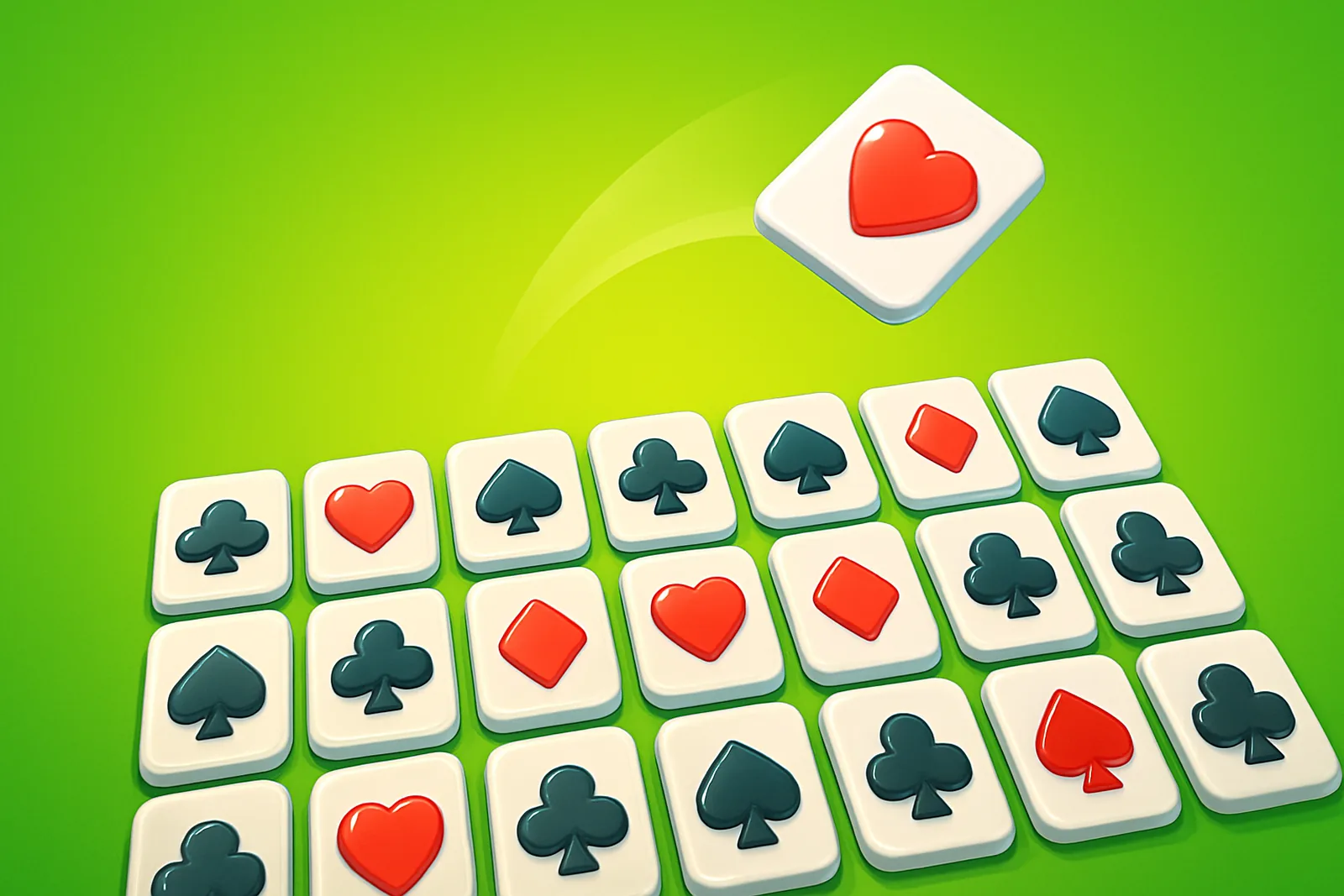
If you want a whole game finished in about five minutes, start with Golf Solitaire. It has one clear job: play a card one rank higher or lower than the waste pile, clear as much as you can, and chase a lower score next round.
Short card games work best when the rules leave you alone. You should not need a long plan, a save file, or a perfect memory of what happened ten minutes ago. The good ones give you a visible target, punish dithering gently, and let a bad start end quickly rather than trapping you in a slow apology of a game.
Golf Solitaire is the cleanest fast solitaire pick, but it is not the only sensible choice. Pyramid Solitaire suits players who like tidy pairing puzzles. TriPeaks Solitaire gives you a little more rhythm and movement. Klondike Solitaire (Turn 1) is familiar and forgiving enough for a casual break. Blackjack is better when you want decisions rather than tableau clearing. The right choice depends less on which game is “best” and more on whether you have a tired brain, a competitive mood, or a tiny gap before something else starts.
What can I play if I want the whole thing done before the kettle boils?
Pick a game where the round ends naturally. Golf Solitaire is built for that. You are not building suits from ace to king, managing long columns, or waiting for one buried card to appear. You look at the waste pile, find a tableau card one rank above or below it, and keep the chain going until you cannot.
That makes it one of the better quick card games for an actual spare gap. A round can go well, badly, or strangely, but it rarely feels stuck in the same way a longer solitaire can. If the run dies, you draw. If the stock runs out, the score tells you how much work was left. Done.
Pyramid Solitaire is another good short card game if you prefer a puzzle with a cleaner arithmetic feel. You remove pairs that add to the target value, so the pleasure is in spotting combinations and keeping future pairs open. It is calm, but it asks for more scanning than Golf Solitaire.
TriPeaks Solitaire sits between the two. Like Golf Solitaire, it uses rank-adjacent play, but the three-peak shape makes the board feel more varied. It is for players who want fast solitaire with a bit more theatre on the table.
Blackjack is the odd one out, in a useful way. It is not solitaire, and it is not about clearing a layout. It is for someone who wants a handful of crisp choices, then a result. Hit, stand, accept the outcome. Very little ceremony.
Which quick game fits the kind of player I am?
- Golf Solitaire: for the player who wants fast solitaire without much housekeeping. You can read the board in seconds, make a chain, draw when it breaks, and care about the score only as much as you fancy. Good for tea breaks and low patience.
- Pyramid Solitaire: for the player who likes neat decisions. The appeal is spotting which cards can pair and which exposed card should wait. It feels more like a small logic puzzle than a race.
- TriPeaks Solitaire: for the player who wants quick movement. Runs feel satisfying because one good choice can expose several new cards. It suits people who like Golf Solitaire’s rhythm but want a busier tableau.
- Klondike Solitaire (Turn 1): for the player who wants familiar comfort. It is slower than the shortest card games here, but the turn-one draw gives you more chances to keep moving than harsher Klondike settings.
- Blackjack: for the player who wants decisions, not sorting. Each hand is brief. You judge the dealer’s upcard, your total, and your nerve. Then the hand is over.
- FreeCell: for the player who wants control and does not mind a longer think. It can be efficient once you know it, but it is less suitable if you are watching the clock.
What makes a card game feel short instead of merely simple?
A game can have few rules and still feel long. Plenty of simple games drag because the board gives you tiny chores instead of meaningful decisions. The difference is friction. How long before you understand the position? How many clicks before something changes? How often does the game leave you waiting for a card that may never matter?
Golf Solitaire feels short because each legal move is local. You compare the waste card with the exposed tableau cards. That is it. A good run gives immediate feedback, and a poor run ends cleanly. You can play half-awake and still know why the round went badly.
Pyramid Solitaire is short for a different reason. The target is stable, so your mind settles into a pattern: find pairs, open blocked cards, avoid wasting flexible values too early. It is simple, but it is not empty.
Klondike Solitaire (Turn 3) shows the other side. It is a fine game, but it tends to ask for more patience because the stock reveals cards in a stricter rhythm. That can be rewarding when you want a proper sit-down game. It is less helpful when you have a meeting reminder muttering at you.
The best 5 minute games give you permission to stop. A finished round, a visible score, or a single resolved hand matters more than a huge menu of modes.
Which solitaire should I start with if I want low stress and a fast finish?
| Game | Best for | Why it feels quick | Watch out for |
|---|---|---|---|
| Golf Solitaire | Players who want fast solitaire with minimal set-up in the head. | Every move checks the same rule: one rank above or below the waste pile. The score arrives naturally when the stock is gone. | Runs can collapse suddenly, so perfectionists may want another go straight away. |
| TriPeaks Solitaire | Players who like streaks, reveals, and a board that changes quickly. | Clearing one card can expose another, so the table often opens in little bursts. | It asks for more visual scanning than Golf Solitaire. |
| Pyramid Solitaire | Players who enjoy pairing and tidy problem solving. | The aim stays consistent, and the pyramid shape makes progress easy to read. | Blocked cards can make a round feel decided before the end. |
| Klondike Solitaire (Turn 1) | Players who want the classic solitaire feel without the stricter stock rhythm. | The draw is forgiving enough that you often have something useful to try. | It can outgrow a short break if the position stays alive. |
| FreeCell | Players who prefer planning over luck and do not mind thinking harder. | Open information keeps frustration lower because you can see the problem. | It is usually a poor fit when you need the whole game over quickly. |
What should I pick when I only have one spare break?
Match the game to the kind of break, not to an abstract ranking. If you have a calm five minutes and want the round to feel complete, choose Golf Solitaire. It gives you a beginning, a run of decisions, and a clear end without asking you to hold a long plan in your head.
If your brain is already warm and you want a small puzzle, choose Pyramid Solitaire. It rewards careful pairing and restraint. The best moments come from leaving the right card exposed for later, which is pleasing if you enjoy seeing a small plan pay off.
- Between tasks: Golf Solitaire. Fast to read, fast to abandon emotionally if the cards are unkind.
- During a quiet lunch: TriPeaks Solitaire. It has more shape and movement, so it feels less bare.
- Before bed: Klondike Solitaire (Turn 1). Familiar rules can be the point when you are done thinking for the day.
- Waiting for someone: Blackjack. A few hands fit neatly into uncertain time because each hand resolves on its own.
Short card games also need a clean failure state. Golf Solitaire has one: cards left on the tableau become your score. Blackjack has one too: the hand ends. Longer solitaire games can be more satisfying, but they often ask you to care past the point where your break has ended.
If you may have to leave suddenly, Golf Solitaire will not sulk. A bad deal becomes a low-stakes score, and a good one is still finished before it turns into homework.
Frequently asked questions
Yes. Golf Solitaire is built for short rounds: 35 tableau cards are face up, and each move is one rank above or below the waste card. Some deals stop quickly because the stock gives you no useful continuation. Others chain nicely and clear fast. Either way, it suits a spare break rather than a long sit-down.
52 cards are used in a standard Golf Solitaire deal: 35 cards in the tableau, 1 card starting the waste pile, and 16 cards in the stock. Your job is to remove the tableau cards by matching one rank up or down from the waste. You do not have to build suits, alternate colours, or manage foundations.
The common misconception is that quick means random. The correction is that short games still punish poor order. In Golf Solitaire, taking the first legal card can block a longer run two moves later. Luck decides the deal and the stock. Your choices decide how much of that deal you waste.
Waste card: 7. Open tableau cards: 6, 8, 9, and Queen. If you take the 8, you may be able to continue to 9; if you take the 6, that line may end at once. A quick check for the next visible rank often matters more than the card directly in front of you.
It depends on your aim: finishing the break or improving the result. If the kettle is nearly done, play the obvious chain and accept the score. If you want a better Golf Solitaire round, pause before each fork and look for the line that exposes or reaches the most follow-up cards.
Compared with TriPeaks Solitaire, Golf Solitaire feels tighter. TriPeaks Solitaire usually gives you a broader shape with more visible routes, while Golf Solitaire puts pressure on each small chain. Both use the one-rank-up-or-down rhythm. Pick TriPeaks Solitaire if you want a little more spread; pick Golf Solitaire if you want a compact score chase.
The short rule is: leave the browser tab open and you can usually return to the same position. The exception is anything that reloads the page, closes the tab, or clears the browser session. Veena Games does not need accounts or downloads, so treat the current tab as the place where that deal lives.
Most people do wrong by treating every legal move as equally good. In Golf Solitaire, a card that continues a run is usually worth more than a card that merely can be played. Look for ranks that appear more than once, and avoid spending the only bridge between two visible clusters unless it clearly helps.
A low score means you left fewer tableau cards uncleared. The exact pleasure of Golf Solitaire is that the result is easy to read: fewer leftovers is better, and clearing the tableau is the clean finish. You are not trying to make a high total. You are trying to waste as little of the deal as possible.
Scan the exposed cards for a run before you move. In Golf Solitaire, that means spotting ranks beside the waste card, then checking whether those cards lead to another rank beside them. In Klondike Solitaire (Turn 1) or FreeCell, look instead for moves that reveal hidden cards. Different games reward different first glances.
Nobody knows precisely, because free browser card games rarely publish reliable completion-time data and players think at different speeds. The best available figure is practical rather than scientific: choose games whose normal round can fit inside 5 minutes. Golf Solitaire often ends sooner when the stock dries up or a long chain clears the tableau.
Microsoft included Solitaire with Windows 3.0 in 1990, which made computer solitaire familiar to a huge audience. The games themselves are older than home computers and were played with physical cards first. Browser versions keep the useful part: instant dealing, no shuffling, and a round you can start without setting anything up.
The cost is the break, not money. On Veena Games there are no accounts, downloads, or payments, so a poor choice only wastes a few minutes. If Spider Solitaire (4 Suits) feels too large for the time you have, switch to Golf Solitaire, Pyramid Solitaire, or Blackjack and keep the session small.
Final thoughts
If you are choosing a short game, be honest about your mood. Tired people do not need a noble challenge. They need a game that starts quickly, gives them a few decent decisions, and lets them leave without feeling they have broken something halfway through.
Golf Solitaire is the friendliest answer for that mood because it has so little ceremony. You can still play it well. You can still make poor choices. The difference is that the game does not bury the fun under administration. The next useful card is either there or it is not, and the round keeps moving.
Some days, that will be too light. Pick FreeCell when you want to solve rather than skim. Pick Klondike Solitaire (Turn 3) when you fancy the older, stricter rhythm. Pick Spider Solitaire (1 Suit) when you want order to emerge slowly from a mess. Those are good uses of time, but they are not the same use of time.
The best choice for a spare break is the one you can close without regret. A small finished game beats a grand unfinished one when the kettle clicks, the train arrives, or someone finally calls you back.
-
 Card Games
Blackjack vs Video Poker: The Two Lowest House Edges
Video poker wins only with the right full-pay machine and perfect play; for most real seats, fair 3:2 blackjack is the cleaner low-edge choice.
18 August 2026
Card Games
Blackjack vs Video Poker: The Two Lowest House Edges
Video poker wins only with the right full-pay machine and perfect play; for most real seats, fair 3:2 blackjack is the cleaner low-edge choice.
18 August 2026
-
 Card Games
Games That Need No Luck at All
A practical guide to skill based card games, from FreeCell and Baker's Game to Eight Off, Yukon Solitaire, and Forty Thieves.
18 August 2026
Card Games
Games That Need No Luck at All
A practical guide to skill based card games, from FreeCell and Baker's Game to Eight Off, Yukon Solitaire, and Forty Thieves.
18 August 2026
-
 Card Games
Is Solitaire Actually Good for Your Brain?
Solitaire gives light attention and memory practice, and can be calming, but the evidence for broad cognitive improvement is thinner than adverts suggest.
13 August 2026
Card Games
Is Solitaire Actually Good for Your Brain?
Solitaire gives light attention and memory practice, and can be calming, but the evidence for broad cognitive improvement is thinner than adverts suggest.
13 August 2026